What’s the weirdest thing you learned this week? Well, whatever it is, we promise you’ll have an even weirder answer if you listen toPopular Science‘s hitpodcast.The Weirdest Thing I Learned This WeekhitsSpotify,YouTube,Apple, and everywhere else you listen to podcasts every-other Wednesday morning. It’s your new favorite source for the strangest science-adjacent facts, figures, and Wikipedia spirals the editors ofPopular Sciencecan muster. If you like the stories in this post, we guarantee you’ll love the show.
FeaturingGreg Jenner
This week’s episode featured special guest Greg Jenner. He’s the host of the BBC podcastYou’re Dead to Me, where the world’s favorite historians and comedians come together to learn and laugh about the past. Greg’s segment focused on some scientific findings about Ancient Egypt that you might not be familiar with-the ones focused onKing Tut’s underwear.
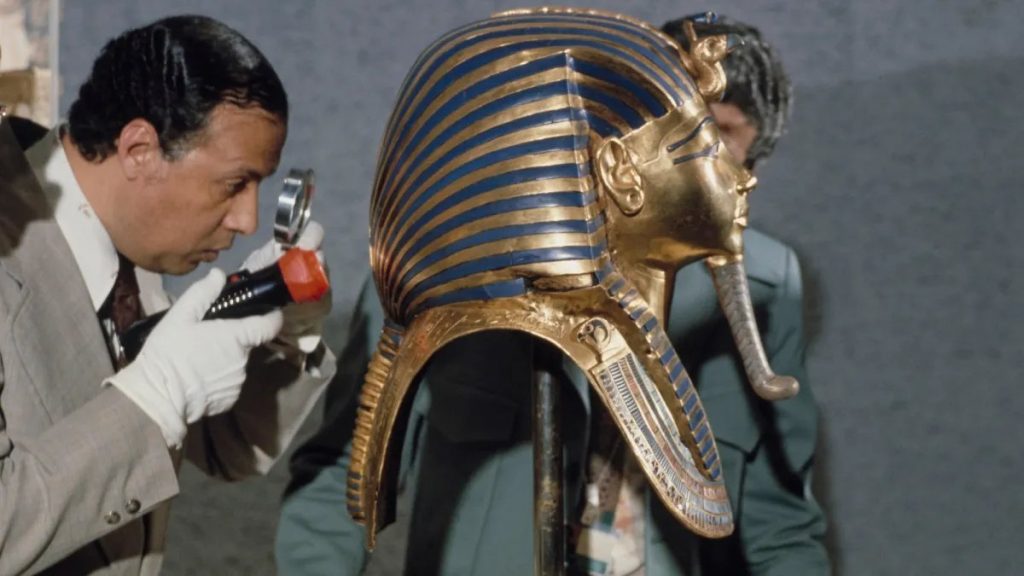
When excavators explored (and emptied)King Tuntankhamun’s tombin the 1920s, they found a lot of magnificent artifacts. The 5,398 officially noted burial objects included ceremonial figurines, chariots, pieces of jewelry and artwork, and even piles of food. Excavators also found King Tut’s underwear-more than 140 pairs of it.
No one knows why King Tut was sent off to the afterlife with so many loincloths, let alone why he packedpreciselythis many for his journey. While scientistshave since studied his wardrobe at length, that particular mystery might be forever lost to time!
Speaking of research: a closer look at Tut’s garmentssuggested his measurementswere 31″, 29″, 43″-rather hippy for a young man. Indeed, a“virtual autopsy” scan of King Tutdone some years ago suggested he had a slim torso and fatty deposits around his hips.
For a time, there was speculation that King Tut may have inherited a congenital disorder that impacted his body shape. Akhenaten,who may have been the boy-king’s father, was depicted in artwork as having wide hips and a protruding belly, which stood out from portraits of other Egyptian royalty.But genetic research has shownit’s unlikely the family had congenitally big butts; it’s more likely that Akhenaten had unusual taste in art (though they definitelydidhave other issues due to inbreeding). It’s even possible that previous estimations of Tut’s body proportions exaggerated the “feminine” qualities that once made headlines. Perhaps this short-lived King simply had a little extra junk in his trunk-and the means to buy as much underwear as his little heart desired.
For more on the history of underwear, keep an eye out for new episodes ofYou’re Dead to Me!
By
Imagine only being allowed to marry someone who doesn’t speak your language. For many groups among theTucano people (or ye’pâ-masa, as they call themselves)of the northwestern Amazon, that’s not a hypothetical.
Linguistic exogamy means marrying outside your linguistic group. Here’s how it works for the Tucano: your identity is closely tied to your father’s language, but you can only marry someone raised speaking a different one. For most (though not all) of the paternal kin groups that speakthe 13 languages that are lumped togetherinto the Tucano by linguists and anthropologists, this is the cultural norm. And we’re not talking about dialects with slight variations, either. Linguists say these various tongues have more distinction between them than the romance languages do from one another. Unsurprisingly,20th century researchers were absolutely fascinatedby this language-based marriage practice.
Does this marital norm sound like a communication nightmare? It’s actually the opposite. Because everyone grows up with a mom who speaks a languageotherthan the larger family group’s go-to language, multilinguality is the norm. Once you factor in all the aunties and grandmas and other female relatives that married in from other paternal lines, you’ve got a lot of languages in the mix. According to some researchers, most people in the region are so casually fluent in several languages that they don’t keep track of how many they speak. In fact, it’s possible that, rather than setting out to pick partners based on linguistics, the people in thisregion married out for other reasons while also maintaining their many languagesthrough strict inheritance practices. Givenhow many languages have vanished over the course of human historyand pre-history, it’s actually pretty awesome that a group with so much cultural exchange hasn’t gradually homogenized their communication into a smaller set of languages. Listen to this week’s episode to learn more!
We recorded this episode on a very special day: Biscuit’s birthday! Biscuit is my Coton de Tulear, aka one of the world’s great “crusty little white dogs.” I decided to take us on a whirlwind tour of the breed’s rags-to-riches story in honor of this historic occasion.
It all started with a 16th-century shipwreck off Madagascar and a very lucky swim to shore, or at least that’s how the story goes. One way or another-whether by happy accident or because someone simply brought them onto the island-they wound up on Madagascar and went absolutely feral. Some breeders say they gained a reputation for outsmarting crocodiles, but that’s probably a shaggy dog tale. But some of them did thrive in the jungle,and eventually caught the attention of Malagasy royalty. By the time breeders brought the dog to the US, the Coton de Tulear was firmly associated with fancy folks. In fact, when American royalty Barbara Streisandfamously had her beloved dog cloned, the precious pup in question was none other than a Coton de Tulear. While it might not beliterallytrue that this breed survived a shipwreck and countless crocodile encounters, going from scrounging for scraps to making celebrity headlines is stillquitea glow-up.
Kaynak: Popular Science