
 •
•Researchers at the University of Campinas in Brazil conducted experiments with obese mice for a week to examine the effects of strength training on fat cells before weight loss began. When people lose weight, many biological changes occur in the body, so it can be difficult for researchers trying to measure the effects of diet, exercise, or another factor, to separate these weight loss effects from what they are trying to measure. The researchers wanted to clarify the effects of strength training on fat cells before weight loss began, so they looked at the visceral (inner) fat around the organs of the mice before the animals lost weight. link
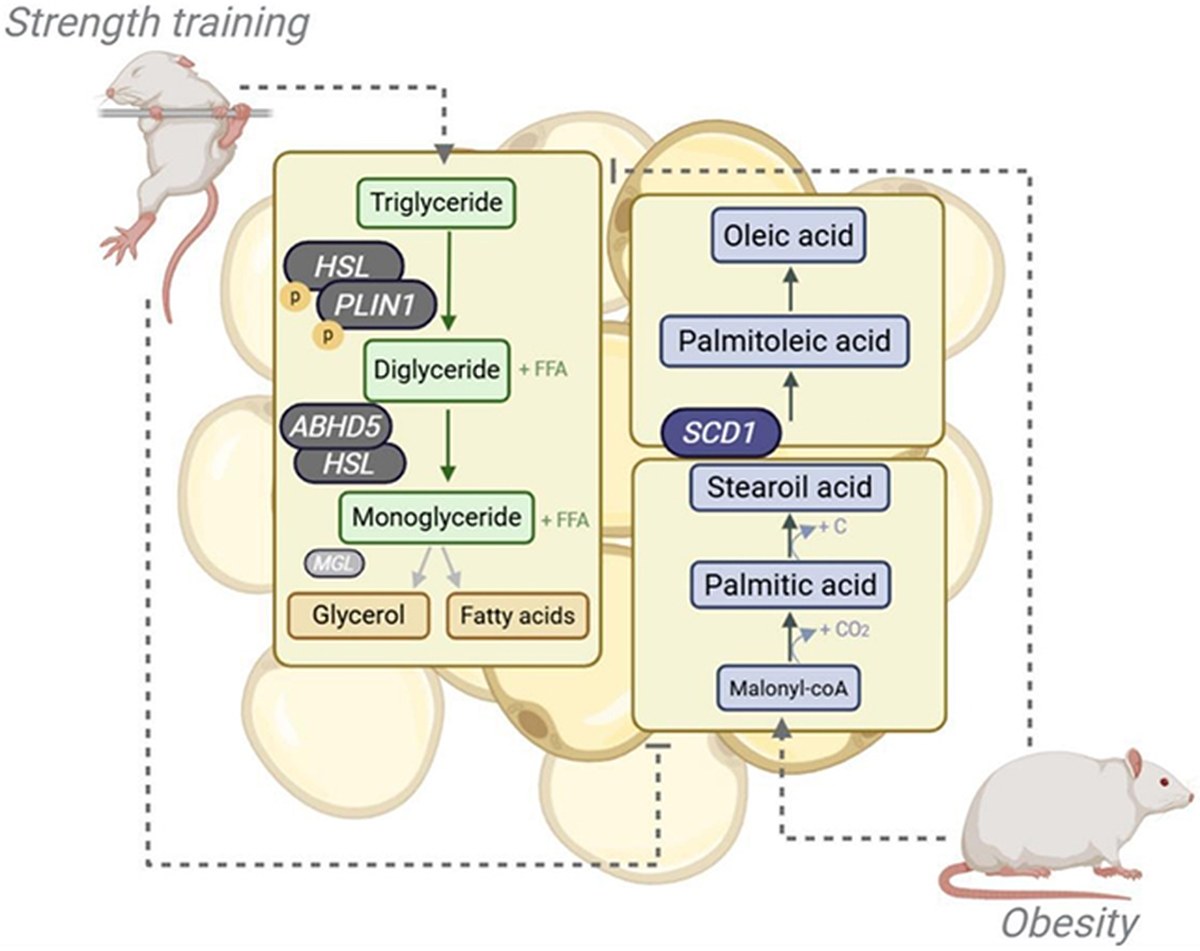
Compared to sedentary obese mice, the mice that were put on a strength training program had less fat and smaller cells around their intestines, which typically indicate healthier fat tissue. Positive changes were also observed in fat storage and fat breakdown signals.

The results of the study, published in Life Sciences, show that strength training improves metabolic health before any weight loss; however, the findings need to be replicated in human studies. link
“People have been doing strength training for two months, but if they don’t lose weight, they think it’s useless,” says obesity surgery expert Leandro Moura. link “However, what we saw in this study was that, just after seven days of strength training – even without weight loss – the molecular pathways that promote fat accumulation were less active, while those that stimulate fat breakdown were more active.”
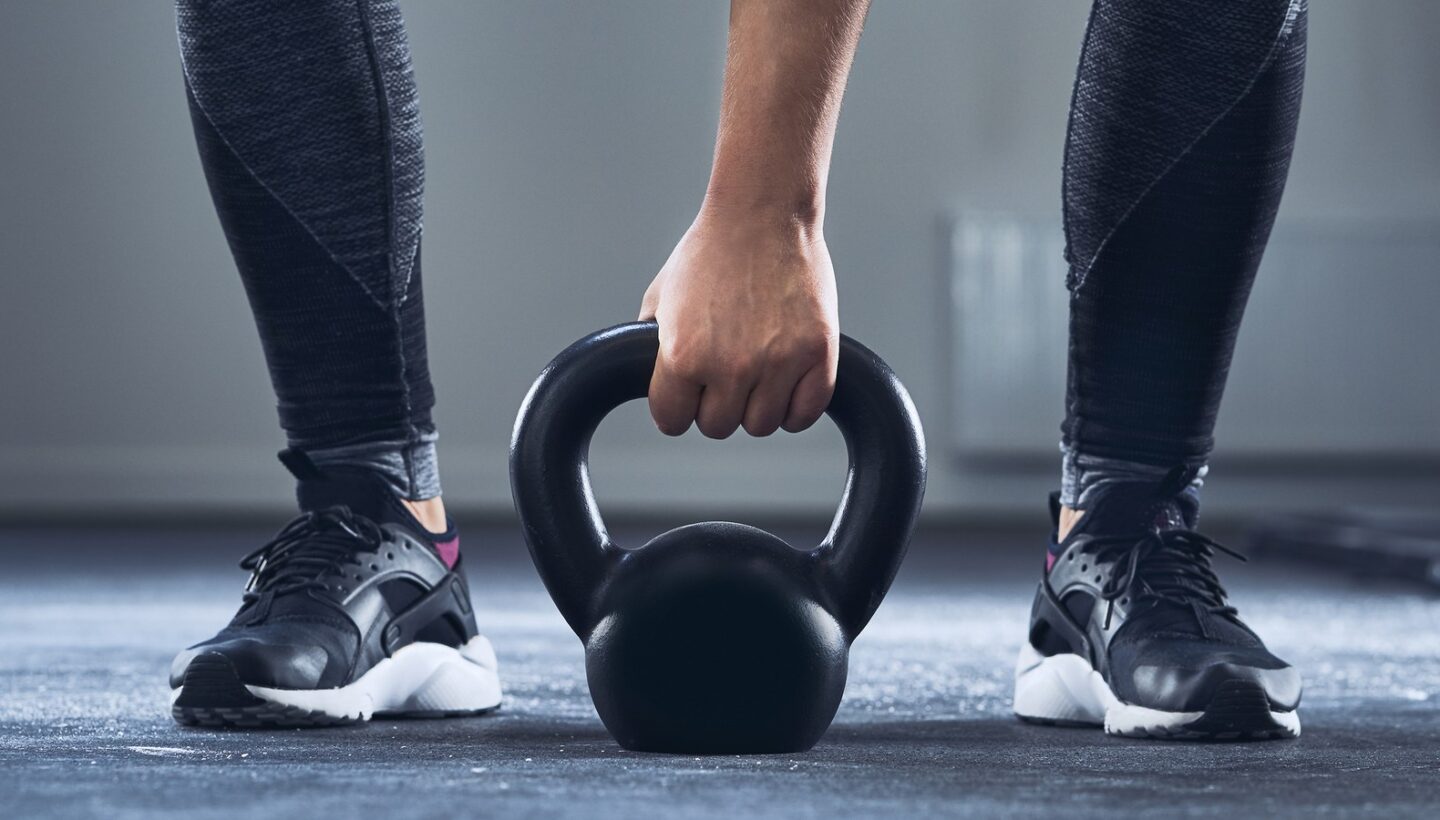
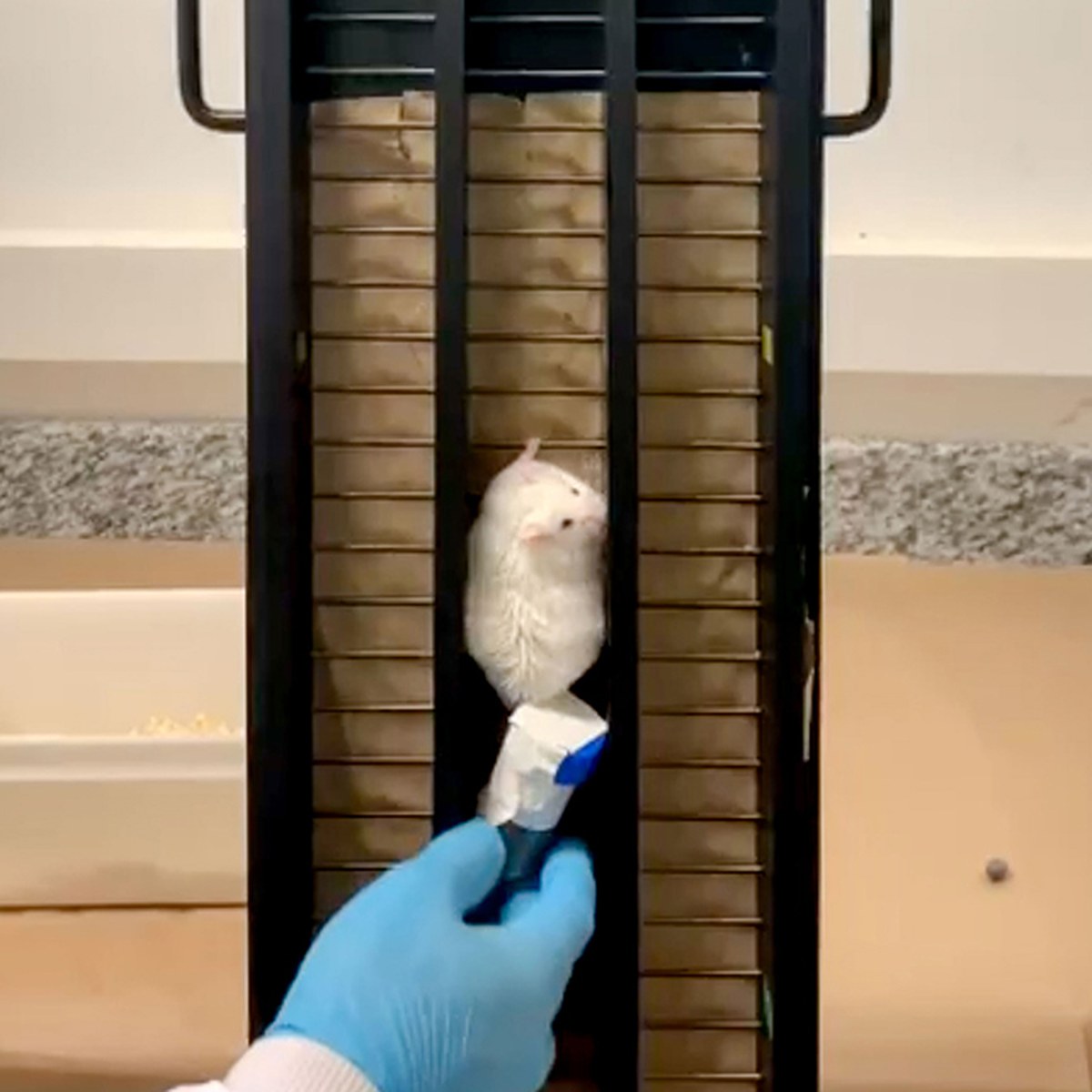
To simulate the effects of weight lifting on the animals, the researchers had obese mice with weights attached to their tails climb a 70-centimeter (27.6-inch) ladder. The sessions consisted of a total of seven, with 20 climbs, 60-90 second rest periods, and the mice working at 70% of their maximum capacity.
“We calculated the weight that each mouse could carry while climbing the ladder,” explains Moura. link “Of course, it’s not possible to reproduce the full strength training exercises that a person would do; however, we stimulated a similar effort in the body, with more intense contractions, in order to mimic a strength training session specific to humans.”
Then, samples of fat tissue taken from the mice that had done the strength training were compared with the tissues of obese mice that had not done any exercise.
In addition to the benefits described above, the team also looked at two proteins, ABHD5 and ATGL. ABHD5, one of the proteins that directs the breakdown of fats, was reduced in obese and sedentary mice, while in the strength training group, ABHD5 levels were normal and there was also an increase in interactions with ATGL, an enzyme that breaks down fats. When the suppression of the Scd1 gene, which plays a role in fat production, was added in mice that exercised, the researchers say that they have evidence that strength training, combined with aerobic exercise, can work to promote weight loss.
The research has been published. This article was verified by Fiona MacDonald (link) and edited by MacDonald (link). We are proud of our process, but we are only human; if you notice any errors, please let us know (link).
























Bądź pierwszą osobą, która skomentuje
Rozwiń swoją myśl za pomocą źródła, pytania lub konstruktywnego kontrargumentu.