Scientists have studied the animals trapped in the hidden depths of the La Brea tar pits in Los Angeles, California, for more than a century. The pits, where natural asphalt has been bubbling to the surface for thousands of years, have extensively preserved the bones of animals that fell into them over millennia.
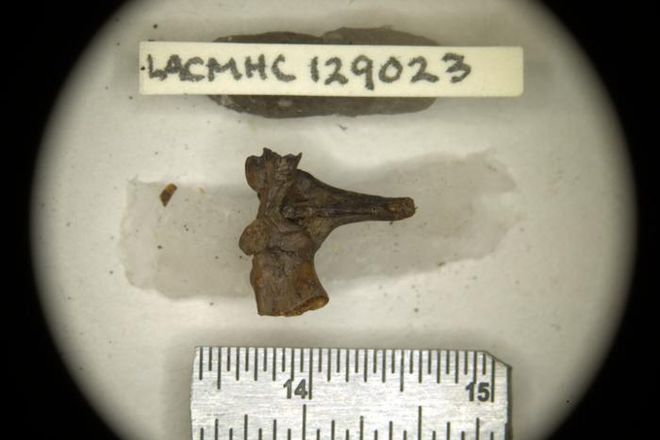
Now, fossils dug out from the pits in the 1950s have finally been identified as an entirely new species. Paleontologists have announced that the samples were of a spadefoot toad that they have given the Latin nameSpea labreae.
The toad’s discovery does more than expand the North American amphibian fossil record. Scientists say the finding holds important information about how the climate changed at the end of the last Ice Age.
The study was published in theJournal of Vertebrate Paleontology.
Finding A Toad in Museum Archives
The new project began not in the pits’ sticky mires, but in their long-standing collection of fossils.
Alberto Cruz, a paleontologist at the National Institute of Anthropology and History (INAH) in Mexico and co-author of the new study, found S. labreae while sifting through the archive’s reptile and amphibian collection.
“I reviewed and reviewed a lot of specimens until I was convinced. I thought, ‘Oh my gosh, this is a new species.’ This material is originally from the 1950s, but when you study it again, you can find gold in these specimens. It’s very cool,” said Cruz in apress release.
Cruz compared the new samples to 80 recorded amphibian specimens at the Museum of Vertebrate Zoology at the University of California, Berkeley, and the Herpetology Collections at the Natural History Museum of Los Angeles County. He noted thatS. labreaeis bigger than relatedtoadspecies that exist today.
What the Fossil Reveals About the Ancient Climate
The discovery holds clues about the climatic conditions at the end of the last Ice Age, when the fossil ofS. labreaewas first submerged in the pits. Amphibians are sensitive to changes in these conditions.
“If you change the environment, you change the vegetation; the climate is warmer or colder, it affects these animals directly,” said Cruz.
Cruz’s investigations also turned up a sample of the Mexican burrowingtoad(Rhinophrynus). This is the first example of this species found in the southwestern U.S. Today, you’d have to travel thousands of kilometers south to southern Mexico to find living populations of thesetoads.
The discovery of an ancient amphibian species is unusual. Amphibian bones are fragile, meaning their fossils often wear away before paleontologists can record them. The natural asphalt at La Brea is incredibly sticky, saturating the bones of animals trapped in the pits and sinking them. This makes it a rare location where these delicate bones can be preserved.
“It’s a great example of how we’re still finding new things at La Brea Tar Pits, even after a century of ongoing excavation and research,” said Emily Lindsey, a curator and excavation site director at the Samuel Oschin Global Center for Ice Age Research at La Brea Tar Pits, in the press release. “There’s definitely more to come.”
Article Sources
Our writers atDiscovermagazine.comuse peer-reviewed studies and high-quality sources for our articles, and our editors review for scientific accuracy and editorial standards. Review the sources used below for this article:
- This article references information from a study published in theJournal of Vertebrate Paleontology:A new extinct Pleistocene species of spadefoot toad and comments on the paleoecology and paleobiogeography of anurans from Rancho La Brea, California
Kaynak: Discovermagazine