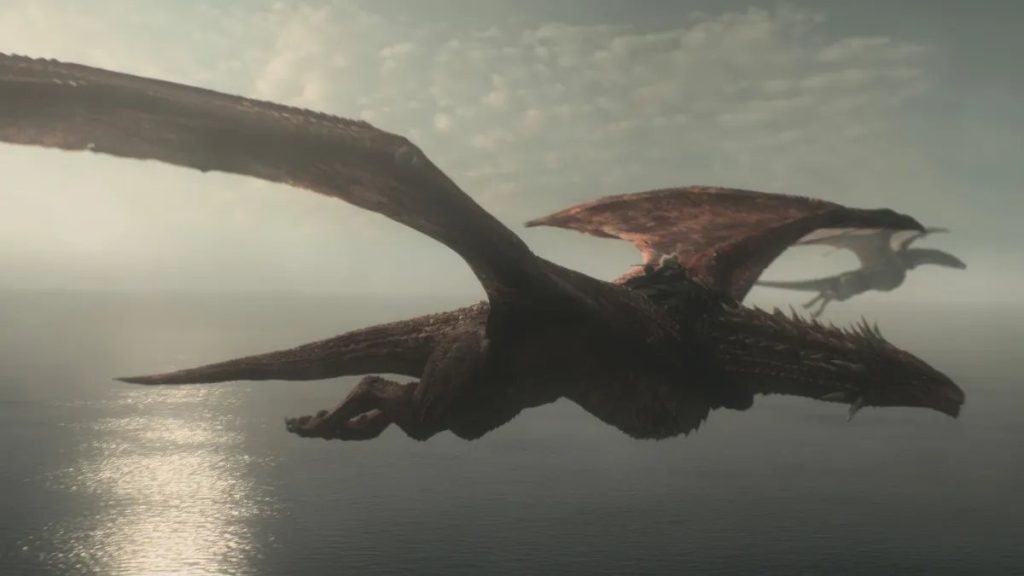
With HBO’s hit fantasy seriesHouse of the Dragonreturning for its third season,winged, fire-breathing beastsare on the minds of many. Every Sunday, these massive, scaled monsters can be seen waging battle and sending a chill down the spine of all in Westeros who happen to hear their iconic reverberating roar from miles away. But fearsome as these flying death-dealers are, one can’t help but wonder if their primary means of travel would actually work.Dragons may not be real, but if they were, could they actually move like they do in the show?
First, the disappointing news for someHouse of the Dragonfans out there: the dragons in the show wouldn’t be able to fly. According to acclaimed biomechanist and expert inbiology-inspired roboticsMichael Habib, their bodies are far too large to support flight. Their long, droopy tails would likely pull them downward and send their snouts bobbing up. Generating enough force to lift their dense, commercial-jetliner-sized bodies would end up breaking their bones.
“You don’t have to be an air mechanics specialist like I am to know that if you put the wings on the very front of a Boeing 747, it isn’t going to fly,” Habib tellsPopular Science.
But that’s really just the start of the conversation. Even though the dragons aren’t scientifically capable of flight, an impressive amount of scientific detail and biomaterial consideration went into their design to make it look like theycouldfly. The fact that most viewers don’t immediately shut off their screens when they see massive dragons soaring through the sky or laying waste to towns is itself a massive win for the art of suspending disbelief, Habib says. That art, ironically, requires a deep knowledge of thescienceof real large flying creatures.
“You’re trying to minimize how many things [a viewer’s] brain has to accept at that moment,” Habib says. Put another way, “how many impossible things are you asking” each viewer to believe.
Game of Thrones, which ran from 2011 to 2019 and is largely based on George R.R. Martin’sA Song of Ice and Firefantasy novel series, features three dragons, all related to each other and roughly similar in shape and size.House of the Dragon, based primarily on Martin’s 2018 novel,Fire & Blood, switches things up significantly. Taking place in an earlier era when dragons were far more prolific,House of the Dragonfeatures at least 17 winged beasts of vastly different shapes and sizes.
To put that in perspective, by the end of the first season,Game of Thronesdirector Matt Shakmansaid the three dragons were the size of Boeing 747s. Cranfield University professor and biomechanical engineer Guy Gratton did some math toput a bit more meat on those bonesand estimated each dragon weighed around 5,700 pounds. That’s roughly the same as a small African elephant or a big pickup truck. He estimates the dragons’ total wing area at about twice their body length, or roughly 690 square feet. Vhagar, the large, menacing dragon that appears throughoutHouse of the Dragonthat Prince Aemond rides, is at least three times as large as Daenerys’s dragons.
Thisgraphic posted by a fan on social mediadoes a great job visualizing the wide variety and size of the dragons. It also shows them to scale compared to known real-world giants like a sperm whale and a Tyrannosaurus rex. According to the graphic, a T. rex lying flat still wouldn’t even come close to matching the wingspan of Vhagar, the largest dragon featured inHouse of the Dragon.
Dan Katcher, a designer credited with making the designs for the three dragons inGame of Thrones,previously told Insiderhe drew inspiration from a variety of different real animals. The dragon’s wings were inspired by bats, its rib cage from a bird, and its neck vertebrae from a T. rex. Its iconic, thick scales, meanwhile, were borrowed from the sungazer lizard. Katcher, who designed the initial idea for the dragon over the course of eight to 12 weeks, reportedly refers to himself as the “father of dragons.”
Habib isn’t just guessing when he says these dragons, impressive though they are, can’t fly even as well as a chicken. His academic research demonstrating how massivereal-world creatures like the pterosaurscan fly has made him a sought-after source for creatives looking to make their own compelling creatures. He says he has done consulting work and has advised on animal design for fictional properties. He also has a personal fascination with dragons. In general, for a dragon to seem feasible from a biomechanics standpoint, it would likely need a powerful, muscular chest, a huge heart, and a honeycomb skeletal structure.
And while basic size limitations mean the dragons in the show surely couldn’t fly, Habib says, the ones the show created do a better job than most at making it seem like they could. Most importantly, the dragons feel immense and heavy. When they try to lift off from the ground, they consistently display a great deal of effort, which signals to the viewer their weight and shocking strength.
To fly, Habib says, any creature needs to overcome the effect of gravity on its mass, which in the case of dragons would require extreme power. Even so, the show is limited in the types of changes it can make to the dragons’ bodies, due to the common image people have come to associate with dragons from centuries of art and lore. Change them too much to make them scientifically accurate, and you end up with a creature that no longer looks like a dragon.
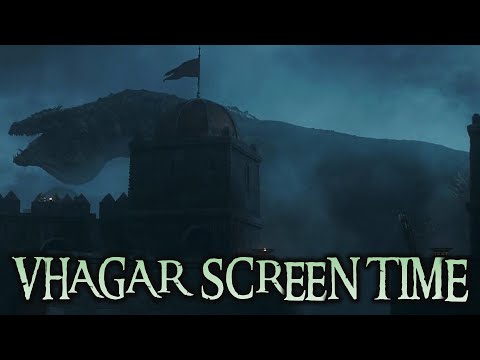
“You can balance that to a certain degree by sweeping the wings forward or back a little bit, but obviously there are limits on how much you can do that,” Habib says. “At some point you get to a stage where you’ve got so much tail, there’s just no way you can balance it.”
But complete scientific accuracy isn’t the point, he says. Fantasy creators simply need to make it accurate enough to suspend disbelief. To do that, Habib says, maybe the biggest consideration is accurate scaling. What the viewer actually sees on screen in terms of size is volume. The way the dragon behaves, and how the world around it responds, is what translates to the perception of weight. Humans, even laypeople with no biomechanical background, have an intuitive sense for what seems right in terms of scale.
“If it doesn’t act heavy, then your brain goes, ‘Well, something’s broken here because I see a huge volume, but it’s acting like it’s floating,” Habib says. “And then you’ve broken it. Now your mind is trying to make sense of this and you’ve gotten pulled out of the story.”
In terms of pure scientific accuracy, Habib says the show hits a sweet spot with the dragons in the original series. By introducing many more shapes and sizes of dragons in the newer series,House of the Dragonforces the viewer to accept more impossibilities. But that’s not necessarily an inherent negative.
House of the Dragon, much more so than the original series, is a show meant to immerse viewers in more lore about the dragons themselves. In a fictional world where dragons were more common and of many different lineages, it’s necessary for them to look diverse.
Put another way, the dragons’ designs suffers from a tradeoff between its physical looks and visual variety on the one hand, and the way it accurately moves and conforms to the laws of physics on the other. In other words, ecology and mechanics are often at odds. Leaning into ecology serves world-building, while trending toward biomechanics aids immediate believability. In this case, favoring ecology better serves the purpose of the storyHouse of the Dragonis trying to tell. It’s more important to understand how these different dragons relate to each other and theirenvironmentthan it is for them to look like they can actually fly.
When it comes to making dragons, HBO has plenty of competition. The oldest depiction of a dragon-like beastdates back at least 4,000 years, and variations of the mythical creature cross cultures and oceans, appearing in ancient Europe, China, and Mesoamerica.
In his bookAn Instinct for Dragons, anthropologistDavid E. Jonesaptly refers to dragons as the “oldest, the first, [and] the most basic monster.” Jones argues that the standard template many people imagine when picturing a dragon-wings, reptilian scales, and sharp teeth-is a kind of composite ofhumanity’s earliest predators. In those times, encountering a large beast like amassive snake, jaguar, or raptor could mean life or death. Fear of those predators, Jones argues, carried on through generations of folklore and morphed into the catch-all dragon.
Other experts, like Stanford historianAdrienne Mayor, argue dragons were really a way for early humans tomake sense of massive dinosaur fossilsthey found. With no understanding of the archaeological record, these travelers imagined the giant bones they found belonged to beasts felled more recently. Some then created stories of brave soldiers killing those imaginary dragons.
There are others still who believe that something like a dragon may have actually existed but went extinct, though there’s no real scientific evidence supporting that.Many of the recovered fossils that most convincingly pass as dragon remainsactually belong topterosaurs, which date back to the Mesozoic Era.
Regardless of how they originated, humans have had plenty of time to refine their dragons. It’s high praise, then, that Habib says the HBO dragons, particularly those in the originalGame of Thronesseries, are among the best he’s seen. Also high up on the list: gold-coveting Smaug fromThe Hobbitfilms and arecent redesignto a table-top role playing gameDungeons and Dragons.
InAsk Us Anything, Popular Science answers your most outlandish, mind-burning questions, from the everyday things you’ve always wondered to the bizarre things you never thought to ask. Have something you’ve always wanted to know?Ask us.
Kaynak: Vulture